Sample approval
What to check on a private label candle sample before a bulk order
By WeChic Candle Team · · 5 min read
Set the sample beside your order brief, the latest artwork and any agreed color reference. Check what this particular sample represents. A stock jar can help you choose a shape; approval of the printed label, fragrance or fitted box may need a separate sample or proof.
Match the jar and wax to the brief
Write the style code and sample revision on your review sheet. Check the vessel shape, wax surface and wick position. If dimensions are in the brief, measure the jar at the points shown on the drawing. If the order includes a lid, fit it to the sample jar and photograph any uneven gap.
For a coated jar, place the physical color reference beside the sample under the same light. Record the reference code so the factory knows which finish you approved. A phone photo is useful for pointing out a difference; screen color alone is a poor reference for production.
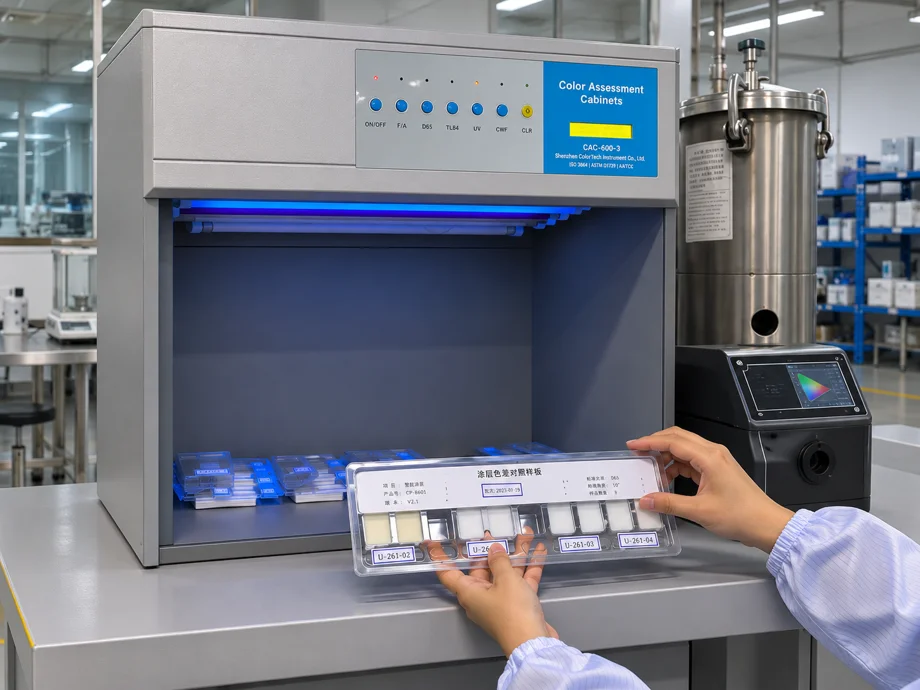
Coating comparison at our factory. Write the chosen swatch code next to the jar style in your approval notes. Identify the fragrance you actually sampled
Match the fragrance name or code on the sample to the brief. If you received two versions, label each one before comparing them and record your choice against the vessel and wax combination. Use a scent strip to narrow your choices. To approve the fragrance in the product, ask which finished candle sample corresponds to your order. Record how the unlit candle smells and how the fragrance carries when lit, following the sample’s care instructions. Ask for burn-test observations for that jar, wax and wick combination, including flame and melt-pool behavior. For a plant-wax sample, photograph any frosting or uneven contact with the glass and agree which visible variations are acceptable for the batch.
Read the artwork on the finished surface
Compare the sample with the dated artwork file. Read the small type, check spelling and turn the jar to see whether the logo sits level. If placement needs to change, mark a photo and give one measurement from a fixed point, such as the distance from the jar base to the bottom of the label. Review any required market or safety label separately from the brand artwork. Compare four examples of logo placement on filled jars before marking your proof. If the artwork needs resizing, measure the jar and test a paper label before sending the revision.
Check the paper dust cover on a lidless candle jar
For a flat cover that sits inside the jar, start with a filled, unlit sample. A jar’s outside diameter tells you little about the space above the wax, especially if the glass tapers.
Size the disc and wick openings. Measure the inside diameter where the disc will sit and check that it can pass through the rim. On a top-view sketch, mark each wick’s position. For two wicks, include the center-to-center distance. Try a paper cutout at actual size: it should lie flat without curling at the edge or pushing a wick sideways.
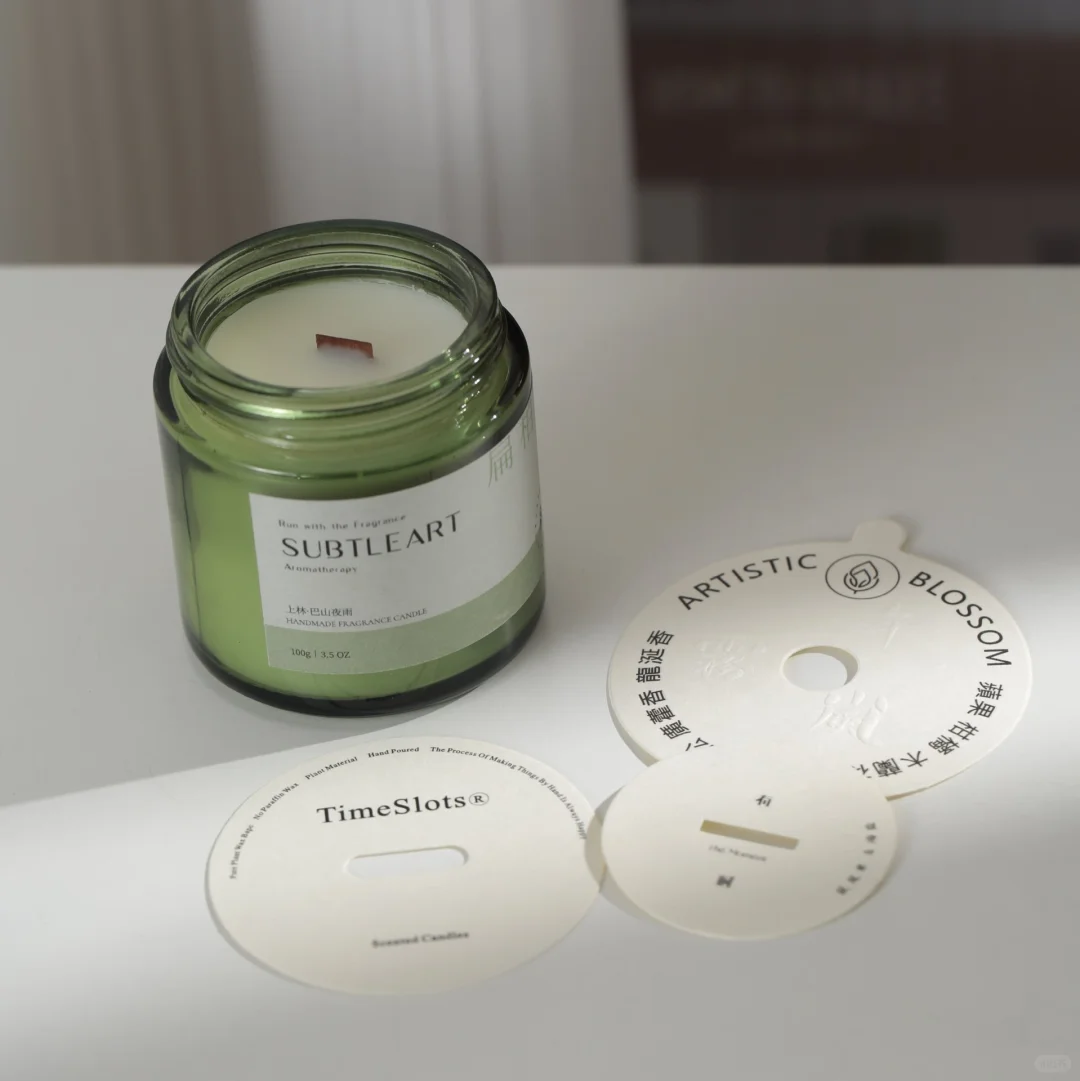
Reference photo: Check the width and thickness of the flat wooden wick when choosing a slot. 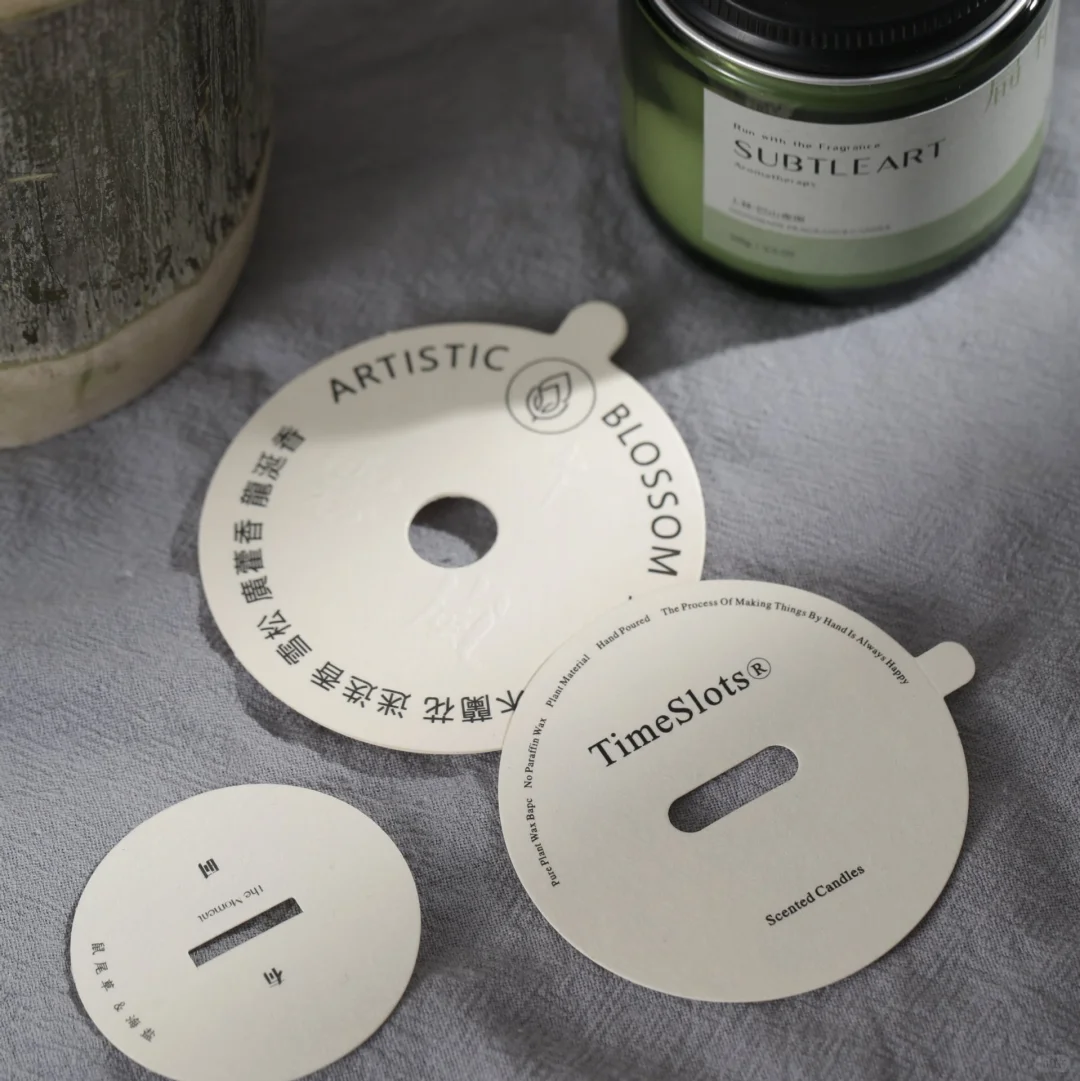
Reference photo: Compare the round hole, rounded slot and straight slot. Test the opening on your sample to see whether the cover lifts freely over the wick. 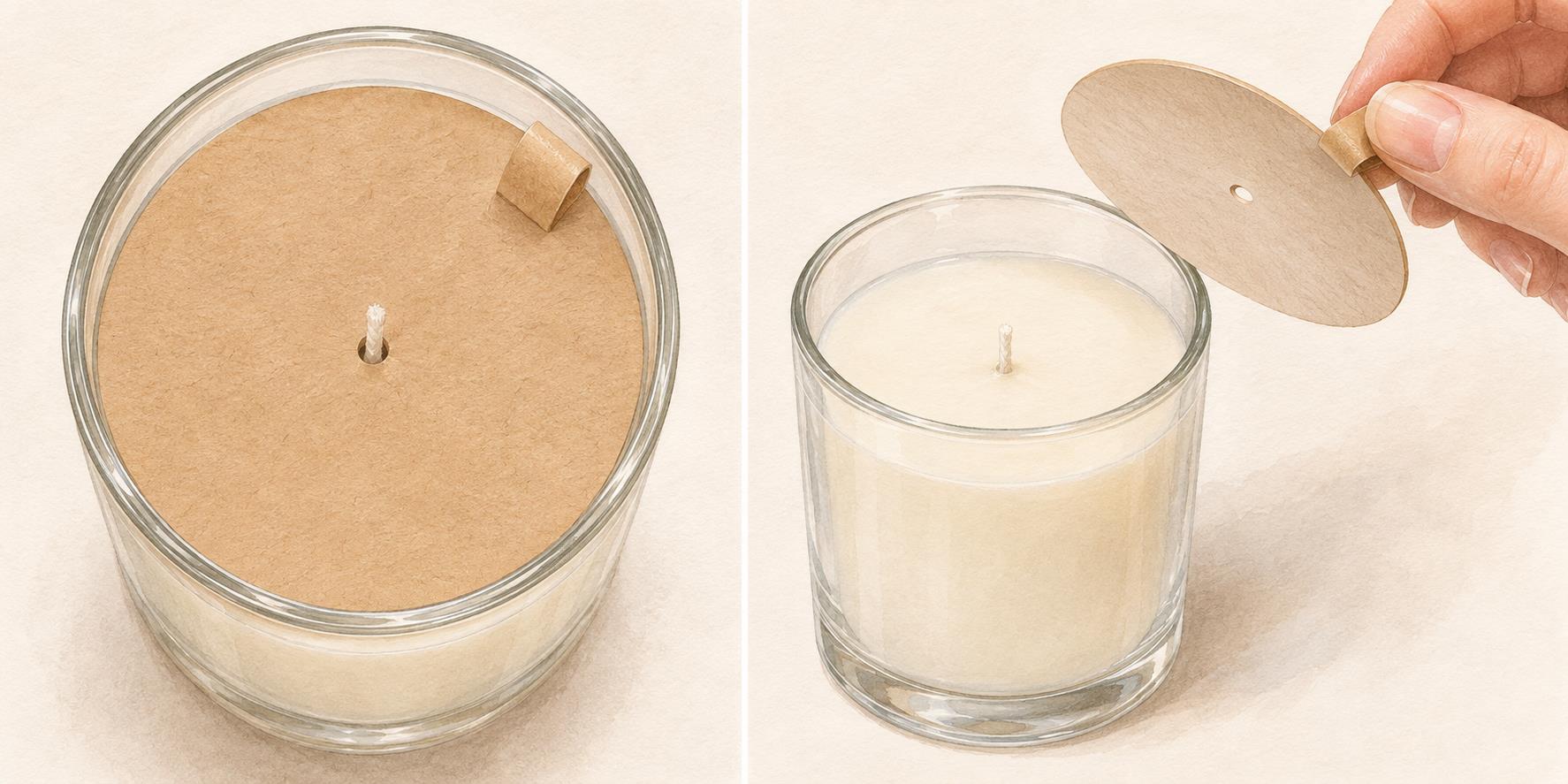
Illustration: Check that the wick sits freely in the opening. Lift the cover by its tab to inspect the paper and wax. Try lifting it out. On the finished sample, lift the cover by its tab or notch. After storing the assembled sample for the agreed trial period, inspect both sides for oil spots, softened edges or smeared print. Note how long the cover was in place, whether it picked up wax and whether it marked the wax surface. If the wax has a raised flower or another sculpted detail, check clearance over its highest point before choosing a flat disc.
Check it in the gift box. Pack the sample with the intended insert and the pull tab folded as it will be supplied. Close and reopen the box. Check whether the tab creases or pushes up the lid. If the cover has shifted or been pressed into the wax, photograph the contact point and request a revised sample. Record the disc diameter, wick opening size and position, and tab or notch shape against the jar style. Ask the supplier to identify the paper weight (g/m²) and any surface coating used on the approved sample. Remove the cover before lighting.
Check the fit of the individual box
If your order includes an individual box, try the chosen jar, lid, label and insert together. Close the carton and open it again. Look for a lid that lifts, a label that rubs or a flap that bows. Record the point of contact. If the sample arrived in a plain carton, ask which parts of the final printed pack still need approval. If the lid catches, compare the jar height with the usable insert depth before revising the insert.
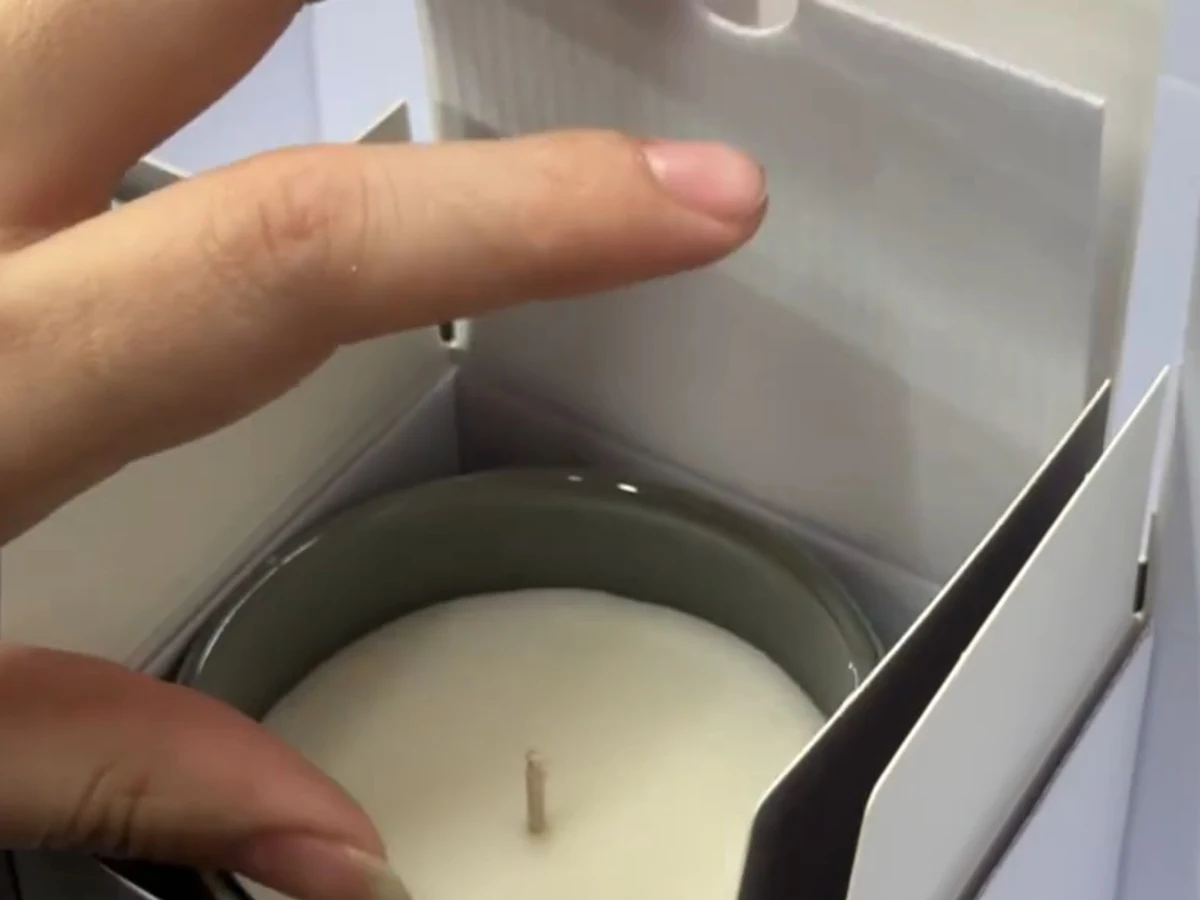
Individual packing at our factory. Use your own jar and lid to check clearance in the box selected for your order.
Send one approval record for each version
Give each item a decision: approved, revision requested, or awaiting a sample. Keep a dated copy with the artwork and photos. If a revision changes the fit or appearance, agree which proof or physical sample you need to see before releasing that item for production.
Example buyer note
RP-10 amber jar · Sample B · Artwork v3. Jar and fragrance approved against Sample B. Label revision requested: move the bottom edge up 3 mm from its position in the marked photo. Box fit pending review with the agreed lid. Please send the revised label proof and confirm the packing sample before production.
One sample of an in-stock style costs US$10. We credit the sample fee toward your subsequent bulk order. Shipping is charged separately and is excluded from the credit. For a custom sample, ask for the project fee and dispatch estimate after confirming the design and artwork.
For a sample review, send the style code, sample revision, artwork file and marked photos. Include your planned order quantity so we can discuss the next proof with you.